

I am a systems person. I love frameworks, and frameworks can be mental shortcuts. They’re kind of like tools in a big toolkit. Got a complex problem? Hit it with a framework and, while you usually will not get it solved, at least you get good insights into its nature, and maybe, just maybe, 2-3 ideas on how to actually solve it.
The funny thing? Quite a few of my favorite data strategy frameworks weren't designed for data strategy in the first place.
So why these 8? Most data frameworks, in my experience, are too heavy on "just data" and not enough business. I've learned all of those frameworks ages ago and found myself coming back to them again and again.
Each has a short summary in my words, plus links to explore them further (if you are stuck on a big problem, it is always worth the time to read these in detail).
1. Cynefin for the win (how to learn and act)
You should start off with the biggest, most important thing you want to share, and this is mine. The most underrated framework, extremely important in times of AI (have you heard the words "thriving in chaos" more often lately? Well, read Cynefin and you'll notice why...).
This framework has one single goal: It tells you when you've encountered a problem that requires a fundamentally different way of thinking (or when your problem has suddenly changed in its nature!).
Given any specific situation you're in, it tells you HOW to figure out what the right thing to do is by asking what currently governs "learning" (is this truly complex or merely complicated?). And then it stops. It's particularly important in helping you see when you should look for a "best practice," when there's no point in it, and when you should simply act, fast, with full force (Hint: with AI, it's very often the latter, and no, a beta/user testing isn't "full force").
Biggest challenge: This framework, IMHO, is underrated for one simple reason: it's HARD to apply because it takes a lot of thinking to get to the point where you understand you've moved into a complex domain and aren't in complicated anymore. But it's worth the time.
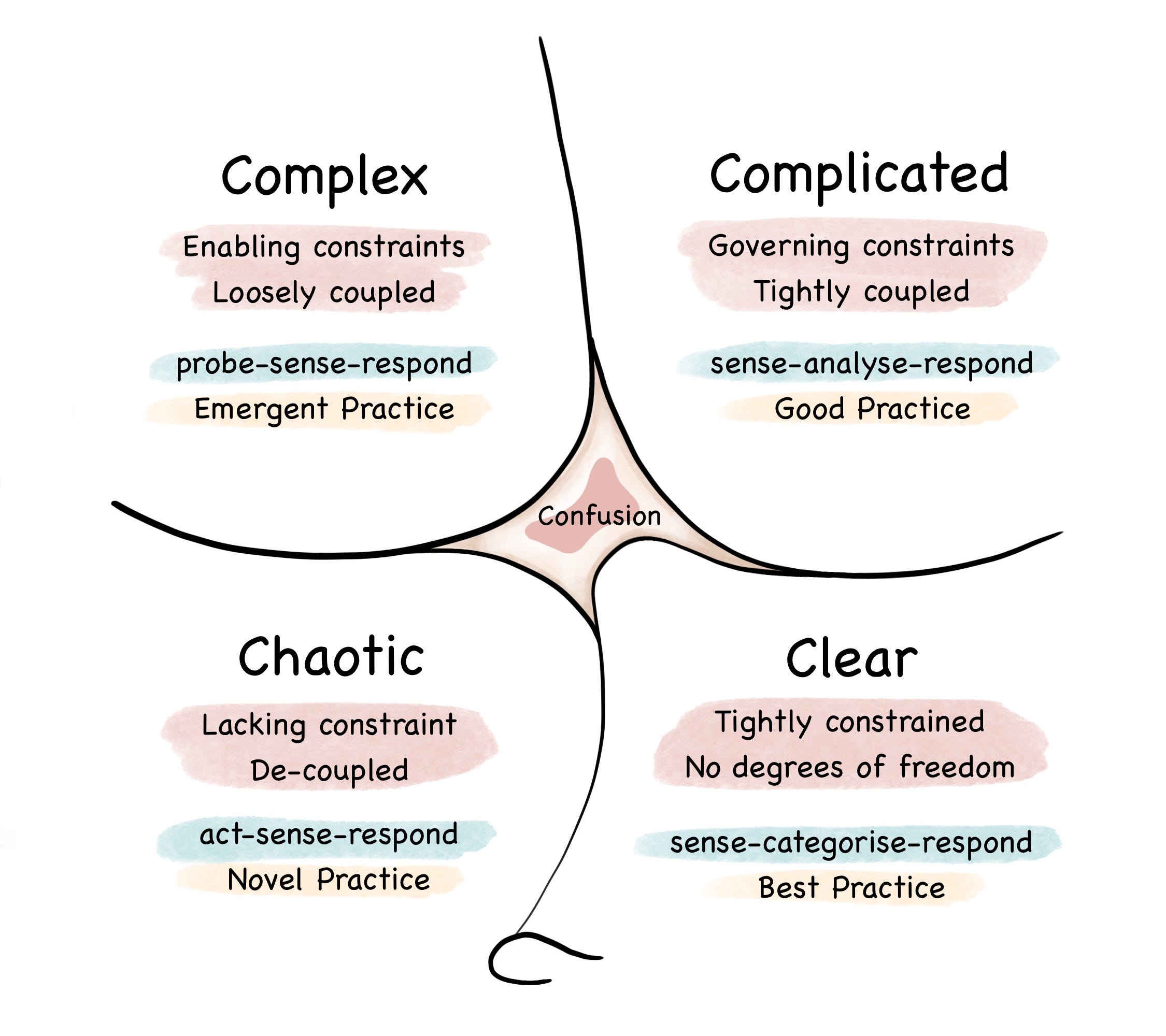

How I use it: I'm using it a lot right now to understand what's going on with AI and why we feel this chaos. I use it pretty often when a leadership team faces a difficult decision, to help provide at least general direction. Does it make sense to move fast? Or is this a "let's actually think about this and collect more data" kind of moment?
More to read: There are really THREE essential parts of the Cynefin framework, and only one is popularized enough to end up on Wikipedia (which you should read). The second is Cynefin Dynamics, which is all about how problems move between the different domains (they do, all the time). And the most important thing in times of AI is Liminal Cynefin: totally unknown, totally worth understanding when a prototype isn't telling you shit.
2. Data flywheels (my personal spin on Jim Collins flywheels)
Jim Collins has this great concept of flywheels. The idea is simple: You keep pushing on a few things that reinforce each other, and eventually the whole thing starts spinning faster and faster. You should know this from my writing and from Amazon, of course.
Now apply that to data. More users give you more data. More data helps you improve your product. A better product attracts more users. And those users produce even more data. Sounds great, doesn't it?
But here's the thing: Just because you collect more data doesn't mean your product actually gets any better. And even if it does, that doesn't mean people will suddenly start using it more. Because it's not actually a flywheel unless one action automatically triggers the next. Simply believing you got a flywheel won't actually produce one out of thin air.
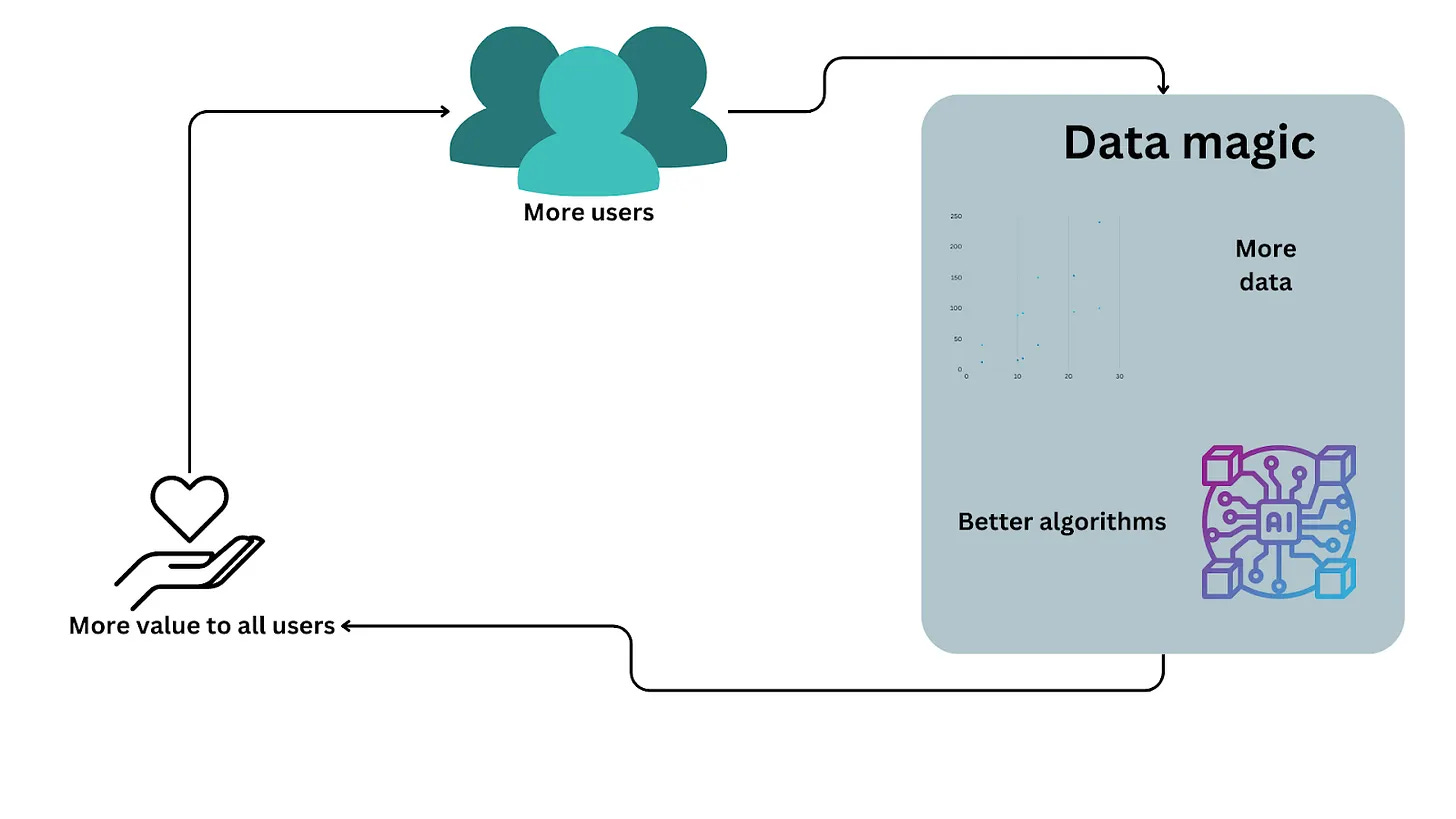
How I use it: Whenever I look at a data or AI product, I try to figure out whether there's a flywheel hidden inside it. Where does the new data come from? How exactly does it improve the product? And why would that make people use it more? Lots of products claim to have a flywheel and feel like they are "constantly accelerating," but they usually miss the true nature of flywheels. This is the proto flywheel for almost all data-heavy products, so it really only comes down to this one thing: Does each one of those three things automatically trigger the next one or not?
More to read: My article on building data flywheels and Jim Collins' Turning the Flywheel (it's a short book, worth every page).
3. Value Chain Mapping (where data competitive advantage comes from)
Value chain mapping is an exercise tech and data people shy away from at first, but precisely because of that, it's a great tool. It will enable you to see the whole business in clear processes and numbers, and thus reduce it again to technological engineering precision.
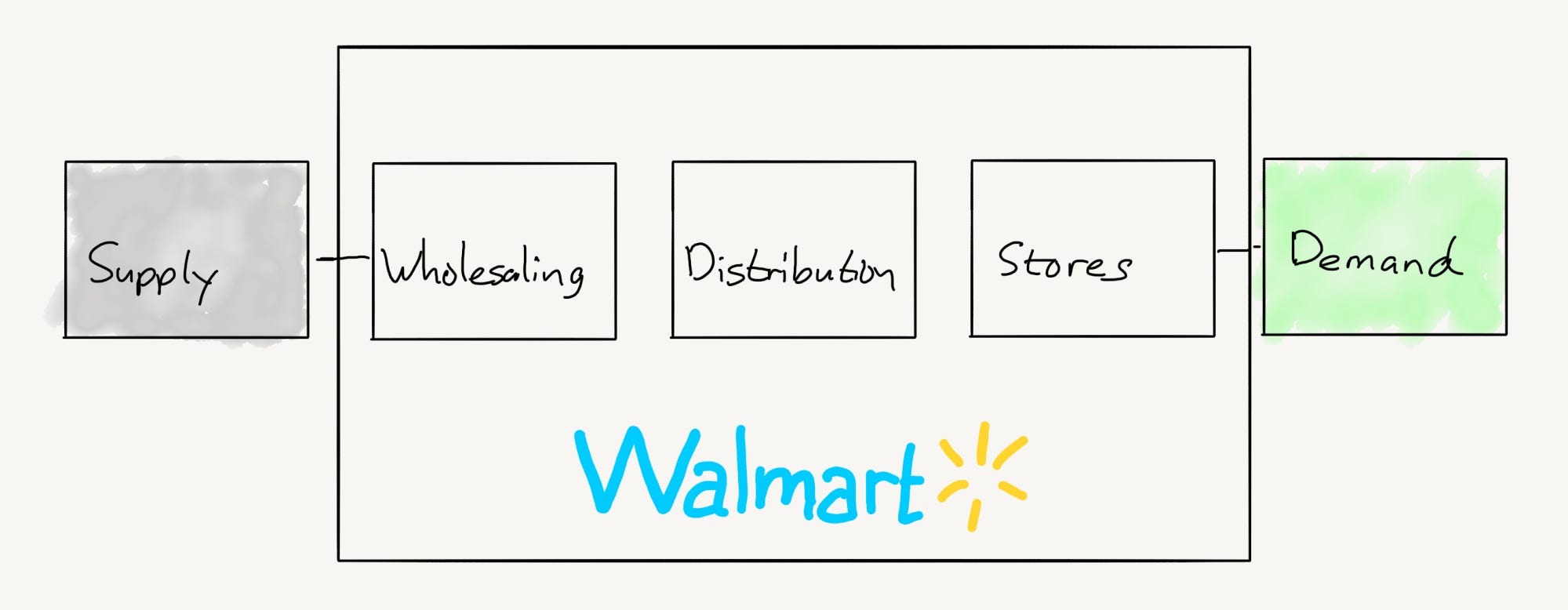
I loved Michael Porter's Competitive Advantage (yes, I read those old weird books). For the few people who have actually read that book, the value chain isn't just this weird image that tells you nothing; it's a tool for understanding where a competitive advantage arises or can be created.
How I use it: Whenever I'm trying to figure out a good data strategy, I start by mapping out the business. From suppliers (or whatever inputs your business has) all the way to customers (and the value they get from you).
Then I look at every single step and, even more importantly, the transitions between them. Where do we lose value? Where could we get more from dumping more data into it? What would happen if we 10x the data in one of those transitions? Usually, you'll find a ton of opportunities this way.
Biggest challenge: If you try to learn about value chains, you usually end up at the concept of "Value Chain Analysis" and a really unhelpful picture (take a look at that article). Analysis kind of means you already have mapped out your value chain. But the key part IMHO is the mapping part, which is unique to your company, and comes first.
More to read: My three tactics for creating a good data strategy (with a section and examples on this) and Michael Porter's Competitive Advantage, Chapter 2, is about the value chain.
4. Ceiling Analysis (what improvements move the needle)
System performance is what counts to me. But when we try to improve things, most people usually end up obsessing over one piece and pour all our energy into tweaking just that. It's natural, but it's also very often simply not effective.
Andrew Ng has a beautiful way of getting around this: Ceiling Analysis. It comes from machine learning, but really, in my experience, you can apply it anywhere.
Break your system into steps, ideally a complete pipeline with inputs and outputs. Now, imagine you make one of those steps perfect. Does it actually change the outcome for the whole thing?
If the answer is "only 1%," then you just saved yourself a ton of work. Go through the rest of the steps, and you'll quickly figure out the true parts of the system you'll actually want to work on.
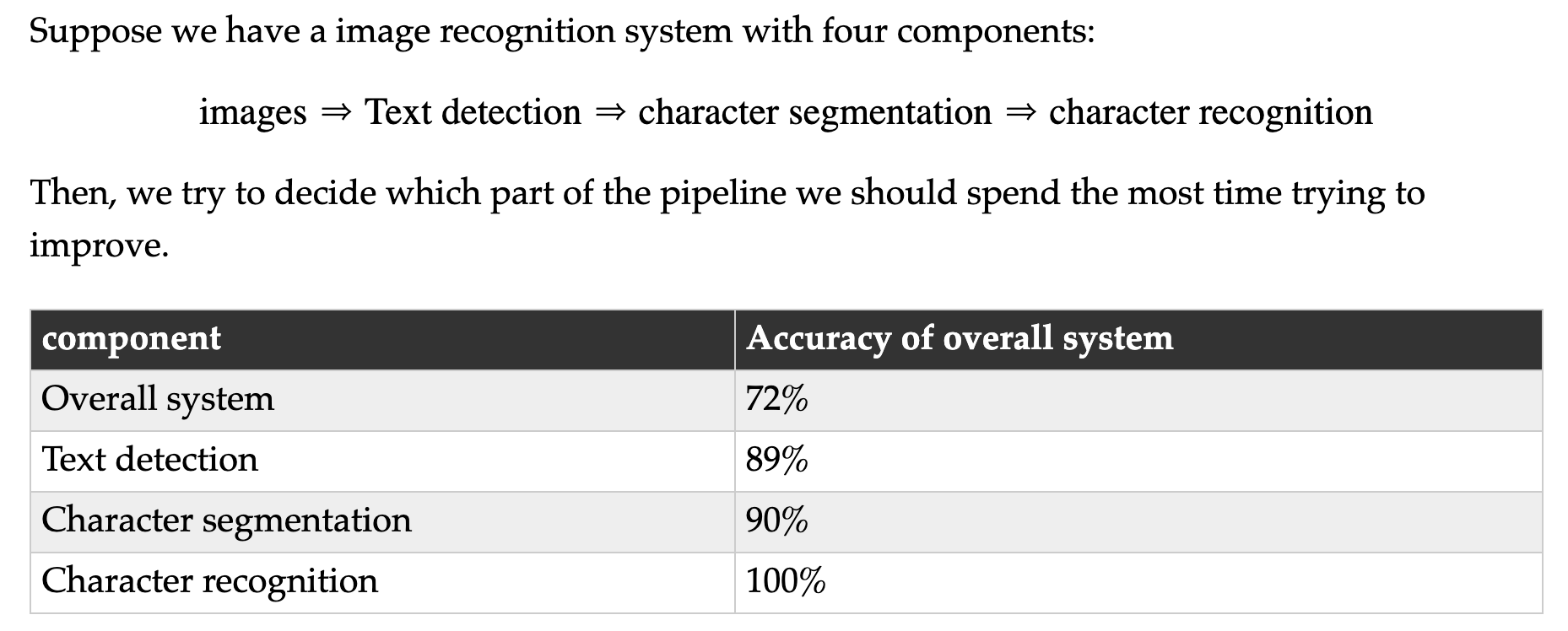
How I use it: Whenever someone wants to improve a business process, product, or data pipeline, I break it down into steps, put numbers to each, and ask: What if we doubled one? What if we made one step perfect? It's a simple but surprisingly effective way to spot where the real leverage is.
More to read: My example of applying it to data strategy and a very good explanation of Andrew Ng's original ML example.
5. Chainlink Systems (when the whole matters more than the parts)
Richard Rumelt (author of the best business strategy book published in the last 30 years) has this absolutely wonderful concept of 'Chainlink Systems'. Imagine building a product from five parts. None of them are amazing on their own. But put them together and suddenly the whole thing just works. Sounds like a terrible product strategy, right? Five things to build, five things that can break, and not one standout feature.
But that's exactly what makes it so powerful. Think Synthesia. It combines AI video generation, speech, editing, translation, and some form of interactive training into one product. The interesting part isn't whether it has the world's best model for each individual task (it hasn't at any step of the process). It's that the whole thing solves a customer problem that no competition even gets close to as of this moment.
Of course, there's a catch. Your weakest link determines how good the whole system can be. You could have the best video generation model in the world, but if your editing experience sucks, the entire product might still suck.
How I use it: When I'm thinking about building a 10x data or AI product, it forces me to stop obsessing over the best algorithm or the fancy tech and focus on the whole experience. Sometimes, a few good-enough parts, combined well, beat one amazing component. The way you fit them together can be your real edge.
More to read: Richard Rumelt's Good Strategy/Bad Strategy, Chapter 8, and my own application to data products.
6. Team Topologies
Most companies organize teams by function. Engineers in one corner, data people in another, business folks somewhere else. Then everyone wonders why it takes 17 meetings to get anything done, or why data people feel isolated and unhappy, not able to move data initiatives further.
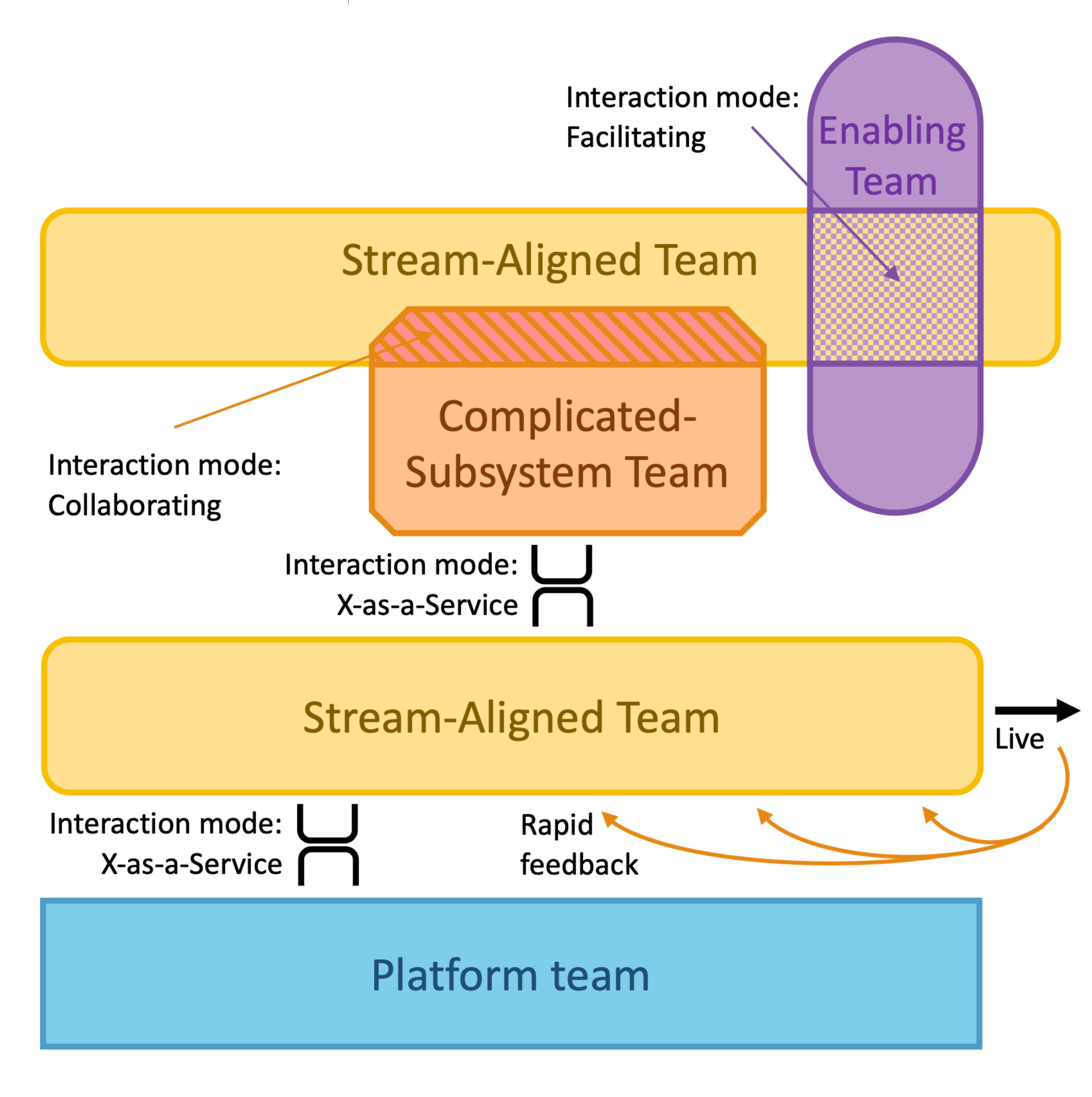
Matthew Skelton and Manuel Pais have a better way of thinking about it. Team Topologies cuts through the chaos with four basic team types and three ways teams should work together. It's surprisingly simple and especially useful for data teams, who always seem to end up as the middlemen for everyone.
How I use it: When I'm thinking about data teams and data platforms, I ask: Should these teams work closely together? Should one team serve another? Or should one help another build the skills to do things themselves? Team Topologies lets me make these relationships explicit instead of just telling everyone to collaborate more.
More to read: The official Team Topologies concepts and my earlier piece on applying them to data teams and platforms.
7. The Two Continuous Intelligence Matrices
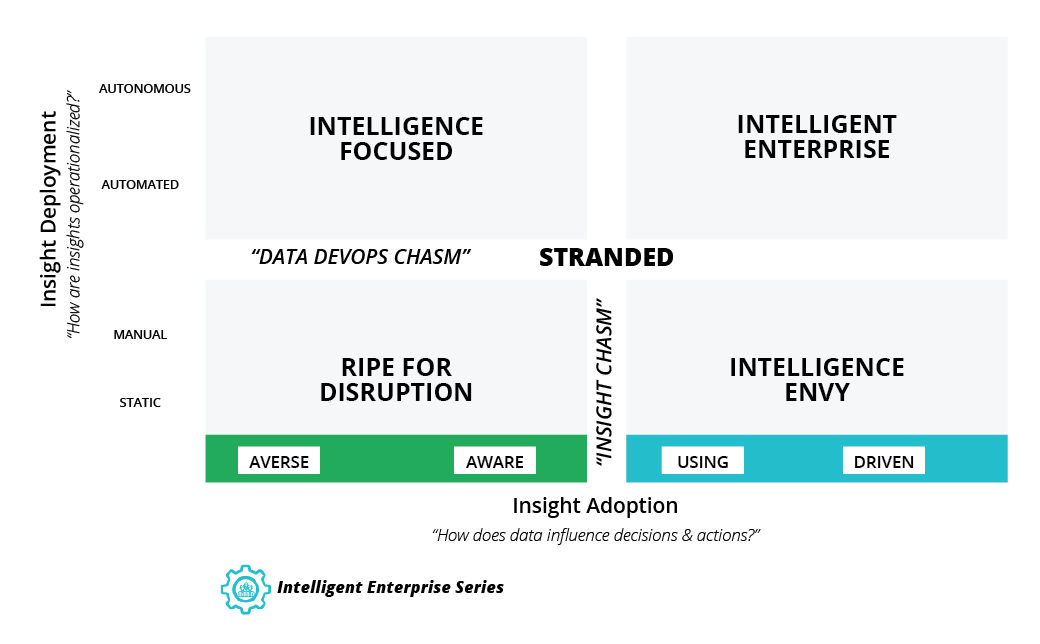
I love these two matrices from a 2019 Thoughtworks article. They're brilliant for showing why so many companies with great data teams and whole machine learning functions still aren't data-driven.
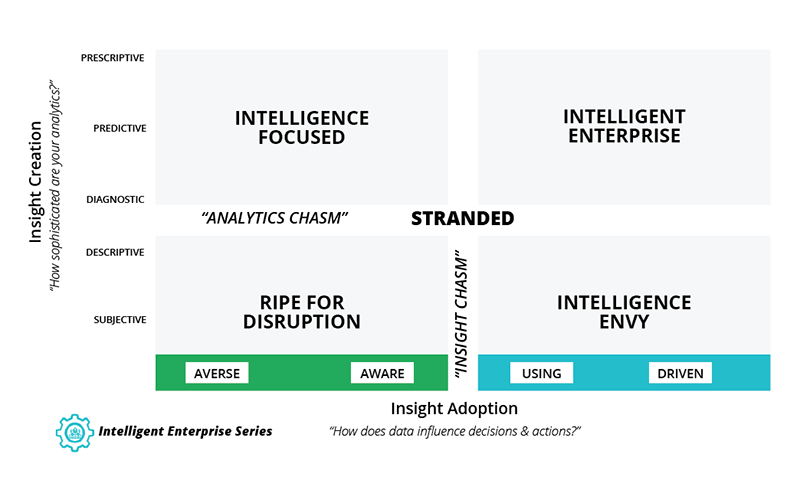
They ask three things: Can you generate good insights? Can you turn those insights into working systems? And do people actually use them in practice? The first matrix is about the gap between generating insights and getting people to use them. The second is about the gap between deploying insights into working systems and getting people to use them (yes, these are two different matrices! Axes make a difference).
That's it. And honestly, that's enough to surface some uncomfortable truths.
How I use it: To figure out why our data investments aren't paying off. Is it really that our models aren't good enough? Or have we just built a great machine for generating insights that nobody actually uses?
That distinction is really useful. It stops every data problem from automatically turning into another round of tech spending.
More to read: Models of Enterprise Intelligence by Ken Collier, Mark Brand and Pramod N. Look at Figures 3a and 3b.
8. The Datacisions Cycle (kind of mine)
This one's kind of mine. Well, partly stolen from Thoughtworks' Continuous Intelligence thinking back in 2019. I borrowed the basic idea, called it the Datacisions Cycle, named a whole newsletter after it, and have been using it ever since.
The idea is ridiculously simple:
Actions → Data → Information → Insights → Decisions → Actions.
That's the entire journey data has to make to create value. And then it starts all over again. The interesting part? Most companies spend a fortune on just one half. They collect data, build pipelines, create dashboards, generate insights. And then... hope someone actually does something with them. The fun part is that those decisions lead to actions that create data, so we always have a cycle; we just have to figure out the bottleneck.
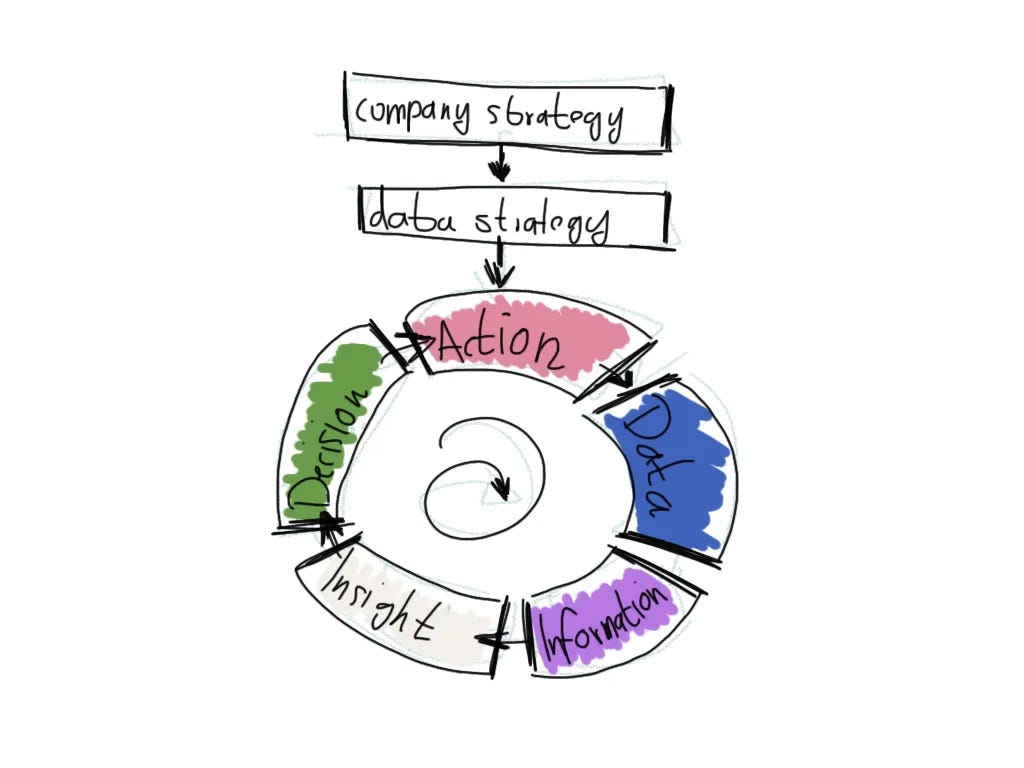
How I use it: Pretty much everywhere. Whenever someone tells me they've invested millions in data but aren't seeing results, I draw the cycle and ask: Where does it break? Are we capturing the wrong things? Producing insights nobody needs? Or simply failing to turn good decisions into actions?
More to read: Thoughtworks' Models of Enterprise Intelligence and my earlier writing on why we need to change how we work with data.