

John Farrall has spent years in the alternative data world, brokering deals, advising data businesses, and now serves as Chief Commercial Officer at SymetryML. He’s seen hundreds of companies pitch their data as the next big revenue stream. When I asked him about the biggest misconceptions, he didn’t hesitate.
“This is going to generate lots of money for me, immediately,” he said. “That’s the first thing everyone believes.”
Then he drew me a 2x2 matrix. High-value versus low-value. Easy versus difficult.
“Everyone thinks they are high value/easy,” he told me. “But they’re really low value/difficult.”
“Data is sold, not bought,” Farrall said. “If you’re waiting for your data’s value to be self-evident, you’ve already lost.”
Here’s why: data value isn’t collected. It’s constructed. And construction isn’t a “data team” activity—it’s three CEO decisions:
Measure what others won’t
Reject the consensus
Compound—don’t publish
Data doesn’t have value. Decisions do.
FWIW, John also writes about the fascinating world of alt data.
If you only have 5 minutes: here are the key points
Most data has no inherent value—value is constructed through deliberate, long-term decisions.
Three CEO-level choices create defensibility: measure what others don’t, reject the consensus, and keep signals private to compound over time.
Renaissance Technologies succeeded not by having better data, but by treating garbage data as raw material for construction, betting on non-obvious patterns, and never publishing.
CDOs fail when tasked with collection, not construction—real moats come from decisions beyond their job scope.
Collected data commoditizes; constructed data creates long-term advantage.
If your data strategy feels easy, it’s probably low-value. The hard, high-value work is strategic, expensive, and long-term—and starts with the CEO.
Renaissance didn’t “have better data.” They built better inputs by failing for years.
“They collected every piece of data they could—including lunar phases and sunspots—to test its viability. Most tests failed.”
Most tests failed. That’s the key phrase. Renaissance Technologies wasn’t sitting on a goldmine. They were building one, brick by brick, running tests that mostly didn’t work.
The result: 66% average annual gross returns since 1988. Competitors with 100x more “proprietary” data, with 30 years to catch up, never closed the gap.
The conventional story is that they hired smarter mathematicians. That’s true but insufficient. Other firms hired mathematicians too. The difference was what those mathematicians did with data.
Renaissance didn’t collect more data than their competitors. They collected different data—weather patterns, shipping manifests, satellite imagery—data their competitors thought was worthless. They bought it cheap precisely because nobody wanted it.
Their early data was garbage. “The trove of data Simons and others had collected proved of little use, mostly because it was riddled with errors and faulty prices.” The edge came from construction—years of systematic cleaning, combining, and testing to make worthless inputs valuable.
Collectors lose twice: first the product, then the leverage.
If collecting data creates moats, Yahoo should have won the internet.
Yahoo had everything: first-mover advantage, the largest user base, all the search data. They employed a “Chief Ontologist” to organize the internet by hand.
Google had two grad students and an algorithm.
Between 2000 and 2004, Yahoo literally paid Google to do search. The company with all the data outsourced to its competitor because it couldn’t make the data work.
The difference wasn’t who collected more. Yahoo collected and organized. Google constructed PageRank—a system that found patterns in hyperlinks nobody else was looking for. Same internet. Different approach to value.
Foursquare tells the same story. They had 14 billion check-ins, the “living, breathing map of the world.” Now the consumer app is dead.
Here’s the irony: Apple, Uber, and Microsoft all use Foursquare’s location data today. Other companies extract more value from Foursquare’s data than Foursquare ever did. Collectors become vendors. Constructors become kings.
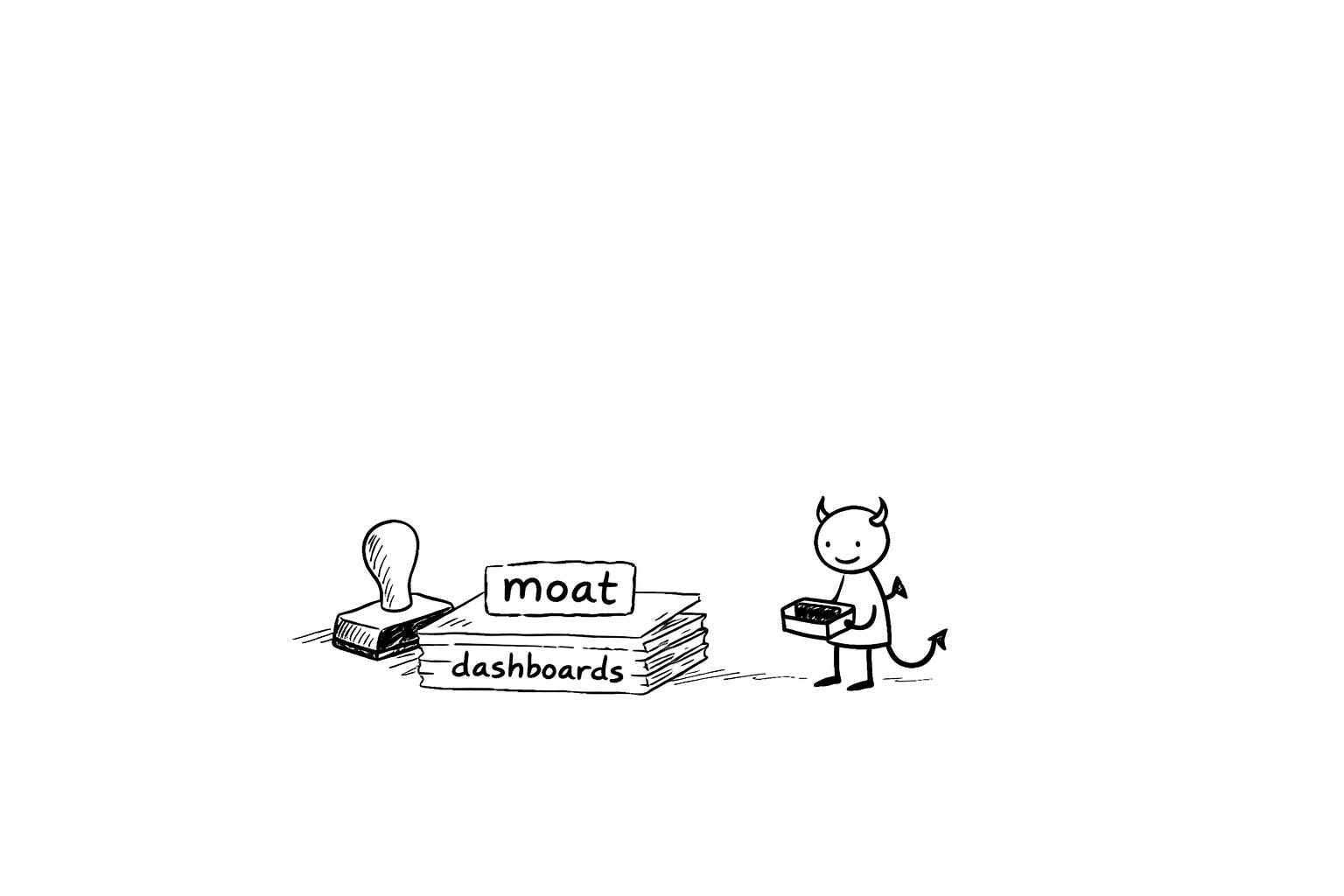
The CDO job is optimized for infrastructure & dashboards, not moats.
The average Chief Data Officer lasts 2.5 years. 85% of big data projects fail. (And don’t even get me started on the “Chiefs of Nothing”)
CDOs fail not because they’re incompetent. They fail because they’re hired to do the wrong thing.
Look at any CDO job description. Centralize. Democratize. Govern. Enable access.
All of that is collection. None of it is construction.
Construction means deciding what to measure that nobody else measures. Construction means rejecting consensus about what data matters. Construction means protecting insights instead of publishing them.
Those are CEO decisions. They’re not in any CDO job description.
Your CDO can execute construction decisions brilliantly. But they can’t make them. They’re measured on adoption metrics and data quality scores—not competitive moats.
Renaissance Technologies didn’t have a Chief Data Officer. They had Jim Simons—a CEO who made construction decisions for 30 years.
Note: Read the “Chief of Nothing” to see the striking similarities here between RenTech and Capital One.
Decision 1: Build inputs competitors can’t buy.
This is a capex bet, not a dashboard request.
While competitors collected obvious price data, Renaissance bought weather patterns and crop reports. Congressional voting records. Satellite imagery before anyone knew what to do with it.
Your CDO collects what exists. They don’t decide what should exist. Construction means measuring things before you know they’re valuable—spending money on data collection that might not pay off for years.
“Do something new. Don’t run with the pack,” Simons once said. “If I’m one of n people doing the same thing, I probably won’t win.”
Most companies do the opposite. They collect the same data as competitors, just more organized. They build the same dashboards. They measure the same KPIs. Then they wonder why their data doesn’t create differentiation.
Billy Beane found value in on-base percentage when everyone else measured batting average. The data existed. Nobody valued it. But here’s what happened next: Beane published his methods. Michael Lewis wrote a book. His edge lasted three years.
Renaissance’s edge has lasted 30 years. The difference? What you do with Construction Decision 3.
Decision 2: Bet against the story everyone tells.
By 1997, more than half of the trading signals Renaissance discovered were “non-intuitive”—patterns they couldn’t explain. They traded on them anyway.
Peter Brown, their co-CEO: “If there were signals that made a lot of sense that were very strong, they would have long-ago been traded out. There are signals that you can’t understand, but they’re there, and they can be relatively strong.”
They called the faint patterns “ghosts”—trends so subtle that most investors couldn’t notice them. Simons eventually came around to a view that the whys didn’t matter, just that the trades worked.
“Any time you hear financial experts talking about how the market went up because of such and such—remember it’s all nonsense,” Brown said.
Construction means betting against industry wisdom. It means trusting patterns that look like noise to everyone else. That takes CEO cover. Nobody else in your organization has the latitude to reject consensus.
Decision 3: Keep the signal private long enough to compound.
Every insight you share is value you’ll never compound.
Renaissance never published. Never attended conferences. Never shared insights. For 30 years.
Jim Simons once quoted Animal Farm: “God gave me a tail to keep off the flies. But I’d rather have had no tail and no flies.” That’s how he felt about publicity.
When employees leave Renaissance, they lose access to the Medallion Fund. Knowledge stays inside the building.
Your CDO is measured on “insights delivered.” Every dashboard shared, every report published—that’s their output metric. They’re literally incentivized to broadcast value.
Renaissance built tiny advantages and compounded them for decades. The signal that’s worth 0.1% today might be worth 10% in five years if nobody else finds it. The moment you publish it, the edge starts decaying.
“Visibility invites competition. The less competition, the better.”
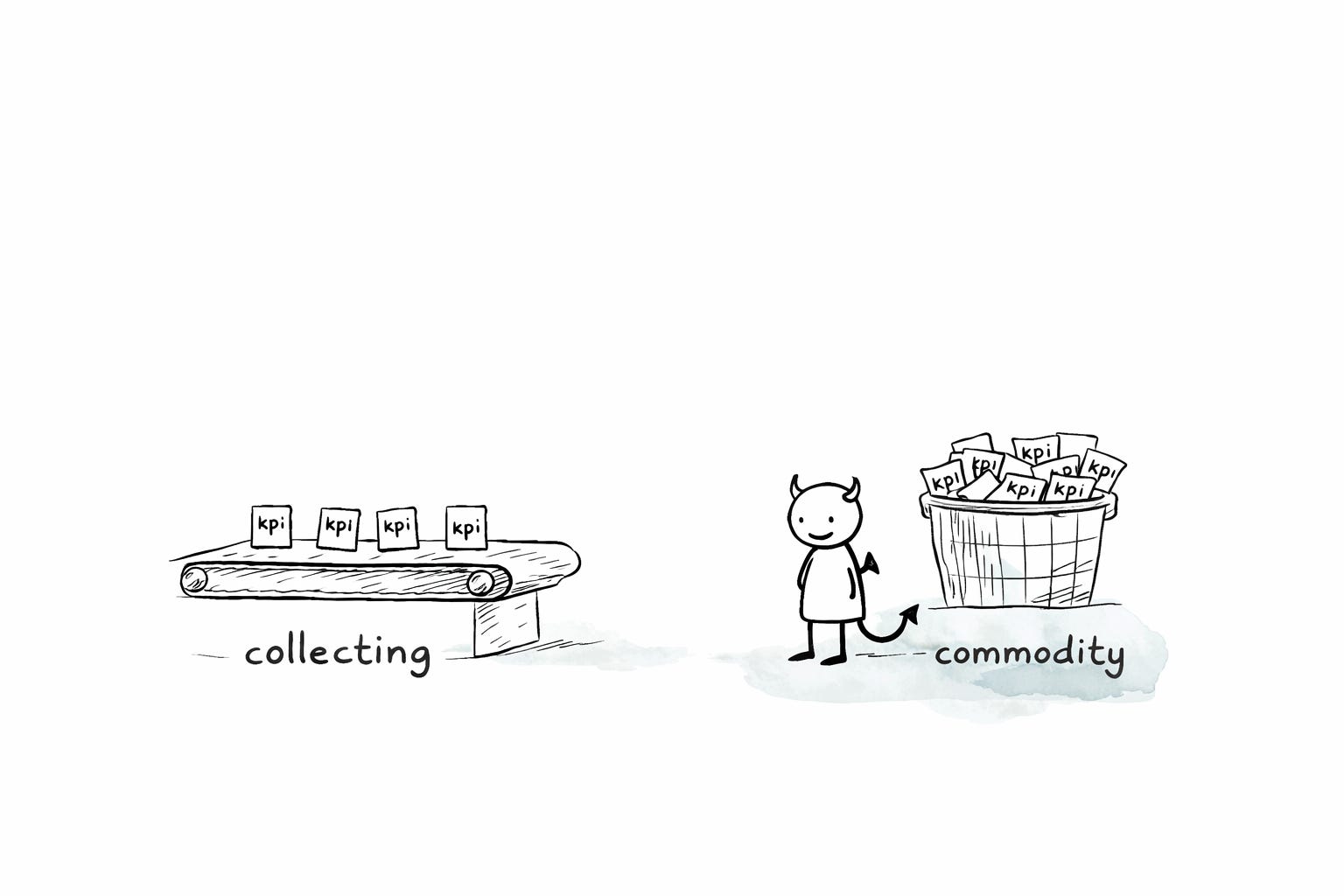
Collected data commoditizes—constructed data compounds
Collected data is the mindset that says: our data is inherently valuable, we just need to organize it. The CDO’s job is to collect what exists and make it accessible.
Constructed data is the mindset that says: data value must be deliberately built through strategic choices. The CEO’s job is to make construction decisions the CDO can’t.
Everyone in Farrall’s meetings thinks they’re high-value/easy. They believe collecting and organizing will unlock obvious value.
They’re actually low-value/difficult. Without construction, they’re organizing commodity inputs that create no differentiation.
Renaissance assumed their data was worthless and spent a decade proving otherwise through systematic construction. Most companies assume their data is valuable and never construct anything.
The 10-Minute CEO Data Construction Scorecard
Measure
What are we measuring that would look wasteful for 12 months?
What data do we pay to create that competitors don’t even have access to?
Reject
Which KPI or “industry best practice” do we believe is misleading?
Where are we explicitly betting on a non-intuitive signal?
Protect
What insight or model would we never put in a deck?
Who outside the core team has access to our highest-leverage analysis?
Compound
Do we have a policy for what not to publish internally?
Are we building reusable “signal factories,” or shipping one-off dashboards?
Accountability
Which CEO-owned construction decision will change this quarter?
If you can’t answer these, you’re collecting—not constructing.
Your board will ask about data ROI at the next meeting.
If you’re collecting, you’ll show dashboards and adoption metrics. The board won’t be convinced.
If you’re constructing, you’ll need to answer three questions only you can answer:
What are we measuring that nobody else measures?
What industry wisdom are we systematically ignoring?
Are we compounding insights or publishing them?
Your CDO can’t make these decisions. The construction choices are yours.
The moat isn’t in the data. It’s in the decisions only you can make about what to build, what to ignore, and what never to share.